

Why Navi Mumbai Is Becoming a 15-Minute City
Imagine living in a city where your home, workplace, school, healthcare facilities, shopping destinations, recreational spaces and everyday conveniences are all within a short commute.
Instead of planning your day around long journeys, you can access most of what you need within minutes.
This is the idea behind the 15-minute city.
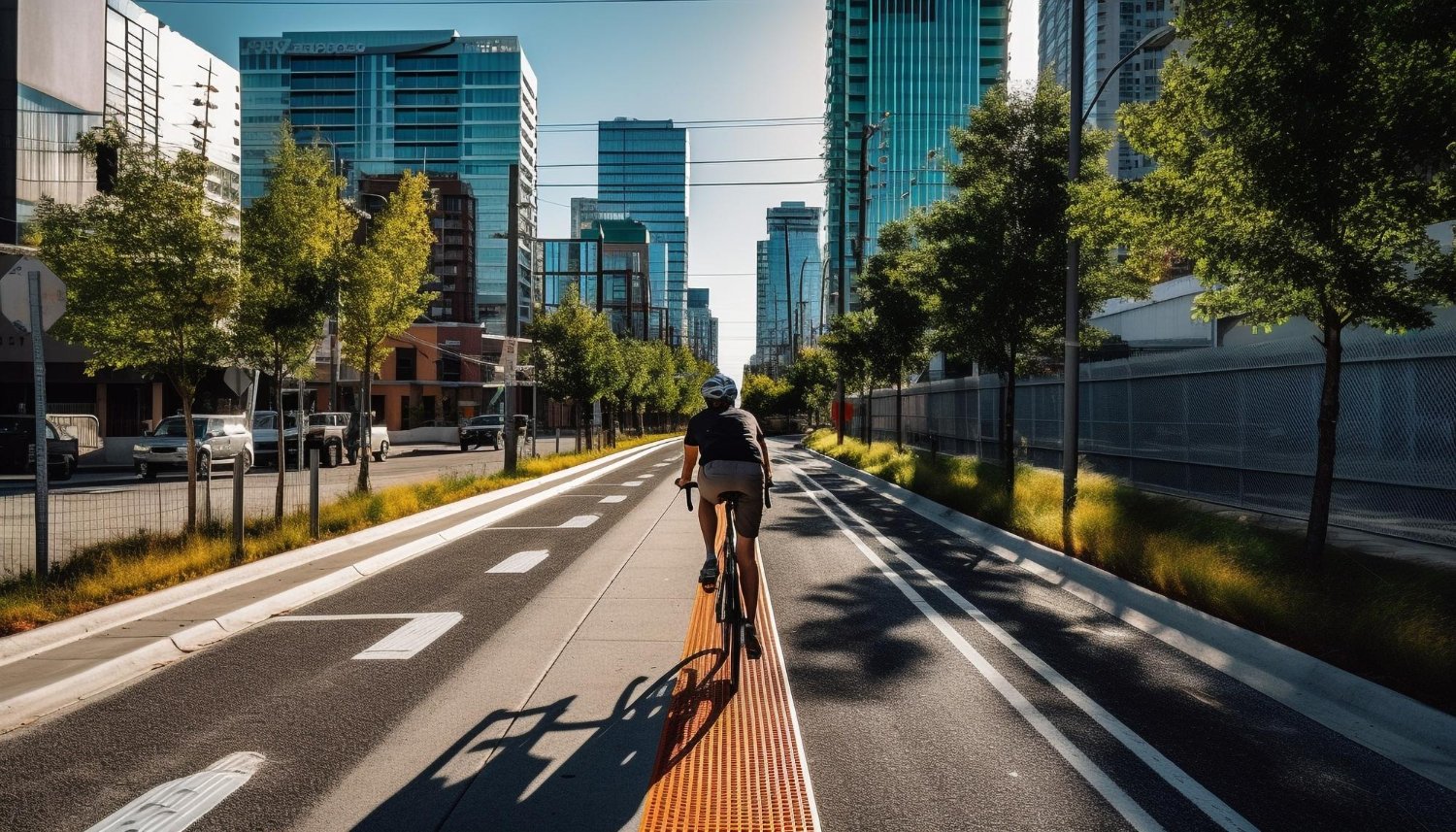
The concept focuses on creating urban environments where essential services and everyday activities are accessible within approximately 15 minutes, whether by walking, cycling or convenient public transport.
While the idea has gained attention globally, Navi Mumbai has many of the characteristics that make a city well suited to this model.
From its original planned development to its distinct residential nodes, commercial centres, transportation networks and expanding infrastructure, Navi Mumbai is gradually moving towards a more connected and convenience-driven urban lifestyle.
What Is a 15-Minute City?
The 15-minute city is an urban planning concept built around one simple principle:
The essentials of everyday life should be accessible close to where people live.
Instead of creating neighbourhoods where residents must travel long distances for every requirement, the 15-minute city encourages a mix of residential, commercial, educational, healthcare, recreational and public spaces within relatively compact areas.
The goal is not necessarily to prevent people from travelling beyond their neighbourhood.
Instead, it is about giving people the option to access everyday necessities closer to home.
This can result in less time spent commuting, greater convenience and potentially a better quality of life.
Navi Mumbai Was Planned Differently
One of Navi Mumbai’s biggest advantages is its planned urban structure.
Unlike many organically developed cities where residential and commercial areas expanded without a unified framework, Navi Mumbai was conceived as a planned city with multiple nodes and designated development zones.
Each node has developed its own ecosystem of housing, schools, markets, healthcare facilities, transportation links and recreational spaces.
This creates the foundation for a more decentralised urban lifestyle.
Instead of having to travel to one central business district or city centre for every requirement, residents can increasingly find what they need within or around their own neighbourhood.
- Residential and Commercial Spaces Are Growing Together
A key characteristic of a 15-minute city is the proximity between homes and everyday commercial activity.
Navi Mumbai has several established and emerging nodes where residential developments exist alongside retail, offices, restaurants, educational institutions and essential services.
Areas such as Vashi, Nerul, Seawoods and Kharghar demonstrate how residential neighbourhoods can evolve into self-sufficient urban ecosystems.
As new developments continue to come up across Navi Mumbai, this mix is becoming increasingly important.
- Public Transport Supports Shorter Urban Journeys
A successful 15-minute city does not mean every resident needs to walk everywhere.
Efficient public transport plays a crucial role.
Navi Mumbai benefits from suburban rail connectivity, road networks and an expanding metro network.
As connectivity improves across different nodes, residents gain more options for travelling between home, work, education and entertainment.
The growth of public transport also reduces dependence on private vehicles for shorter and medium-distance journeys.
- Kharghar Shows How a Neighbourhood Can Become Self-Sufficient
Kharghar is a strong example of Navi Mumbai’s evolving neighbourhood model.
The node combines residential developments with educational institutions, healthcare facilities, retail spaces, restaurants, recreational areas and transportation options.
Residents can access many everyday requirements without necessarily travelling to Mumbai or another major commercial district.
Its combination of established infrastructure and continuing development has also helped position Kharghar as an attractive residential destination for families and younger professionals.
- Seawoods and Nerul Offer Strong Lifestyle Connectivity
Seawoods and Nerul demonstrate another aspect of the 15-minute city concept: the integration of residential living with shopping, entertainment, transport and social infrastructure.
The presence of established commercial and lifestyle destinations means residents can access many everyday and leisure requirements without making long cross-city journeys.
This becomes particularly valuable for modern families where different members may have different schedules and requirements.
Convenience is no longer simply about distance. It is about how many daily activities can be completed efficiently within the surrounding neighbourhood.
- Vashi Has Long Functioned as a Self-Contained Urban Hub
Vashi is one of Navi Mumbai’s most established nodes and has developed into a significant commercial and residential centre.
The combination of offices, retail, education, healthcare, entertainment and transportation gives residents access to a broad range of services within a relatively compact urban area.
This is closely aligned with the philosophy of a 15-minute city.
The success of established nodes such as Vashi also demonstrates how planned urban development can create neighbourhoods that remain functional and relevant as the city grows.
- Infrastructure Is Expanding the City’s Reach
Navi Mumbai’s urban landscape is changing rapidly.
Major infrastructure projects and improvements in connectivity are creating new opportunities for residential and commercial development.
Better road connectivity, metro expansion and improved access to major transportation infrastructure are gradually reducing the perceived distance between different parts of the region.
As connectivity improves, previously emerging locations can develop their own residential and commercial ecosystems.
This is an important part of Navi Mumbai’s evolution towards a more distributed urban model.
- The Navi Mumbai International Airport Effect
The Navi Mumbai International Airport is expected to have a significant influence on the region’s future development.
An airport is not simply a transportation facility. Large infrastructure projects of this scale can influence commercial activity, employment, hospitality, logistics and surrounding residential development.
As economic activity grows around major infrastructure corridors, nearby neighbourhoods can become increasingly self-sufficient.
This could further strengthen Navi Mumbai’s position as a major urban and economic centre rather than simply a residential extension of Mumbai.
- The 15-Minute City Can Improve Quality of Life
One of the biggest benefits of this urban model is time.
Consider the difference between spending two hours commuting every day and being able to complete most routine journeys within 15 to 30 minutes.
The additional time can be spent with family, pursuing hobbies, exercising, working or simply relaxing.
For young professionals and families, this can make a significant difference to their overall lifestyle.
The value of a home therefore extends beyond the apartment itself.
The neighbourhood around the home can have an equally important impact on everyday life.
- It Can Also Influence Property Demand
Location has always been a major factor in real estate.
However, as homebuyers become increasingly lifestyle-conscious, neighbourhood convenience is becoming an even stronger consideration.
Properties located close to schools, healthcare facilities, retail destinations, public transport, workplaces and recreational spaces can offer greater practical value.
This can influence both buyer demand and rental demand.
For investors, understanding how a neighbourhood is developing can therefore be just as important as analysing the property itself.
- What Homebuyers Should Look for
If you are evaluating a property in Navi Mumbai through the lens of the 15-minute city concept, consider more than the apartment.
Ask:
- How close are essential daily services?
- Is public transport easily accessible?
- Are schools and healthcare facilities nearby?
- How convenient are shopping and retail options?
- Are there recreational and green spaces?
- What employment hubs are accessible?
- How is the road connectivity?
- What infrastructure projects are planned or under development?
- Is the neighbourhood developing its own commercial ecosystem?
- Does the location offer long-term potential?
These questions can help buyers understand the actual lifestyle value of a location.
The Future of Navi Mumbai’s Urban Lifestyle
The evolution towards a 15-minute city does not mean every part of Navi Mumbai will look the same.
Different nodes will continue to develop according to their individual strengths.
Some will remain primarily residential. Others will become stronger commercial or business hubs. Some emerging areas may experience rapid transformation as infrastructure and employment opportunities expand.
What is likely to become increasingly important is proximity.
Homebuyers are beginning to value the ability to access more of their daily lives without depending on long-distance travel.
This could influence not only where people choose to buy homes but also how developers design future communities.
Navi Mumbai’s journey towards a 15-minute city is closely connected to the way it was originally planned and the infrastructure being developed today.
Its network of distinct nodes, established social infrastructure, expanding public transport and growing commercial ecosystem provide the foundation for a more connected and convenient urban lifestyle.
For homebuyers, this creates an important shift in the way a property should be evaluated.
The question is no longer simply:
“How good is this home?”
It is also:
“How good is the life around this home?”
A well-connected neighbourhood can save time, improve convenience and potentially strengthen the long-term appeal of a property.
As Navi Mumbai continues to evolve, the homes that offer not just good living spaces but also access to everything people need may increasingly stand out.
Looking to buy a home in Navi Mumbai?
At Aristo Real Estate Consultants, we help buyers understand not just properties, but the locations, connectivity, infrastructure and lifestyle opportunities surrounding them.
Connect with Aristo Real Estate Consultants to explore the right property in the right neighbourhood for your lifestyle and long-term goals.
